
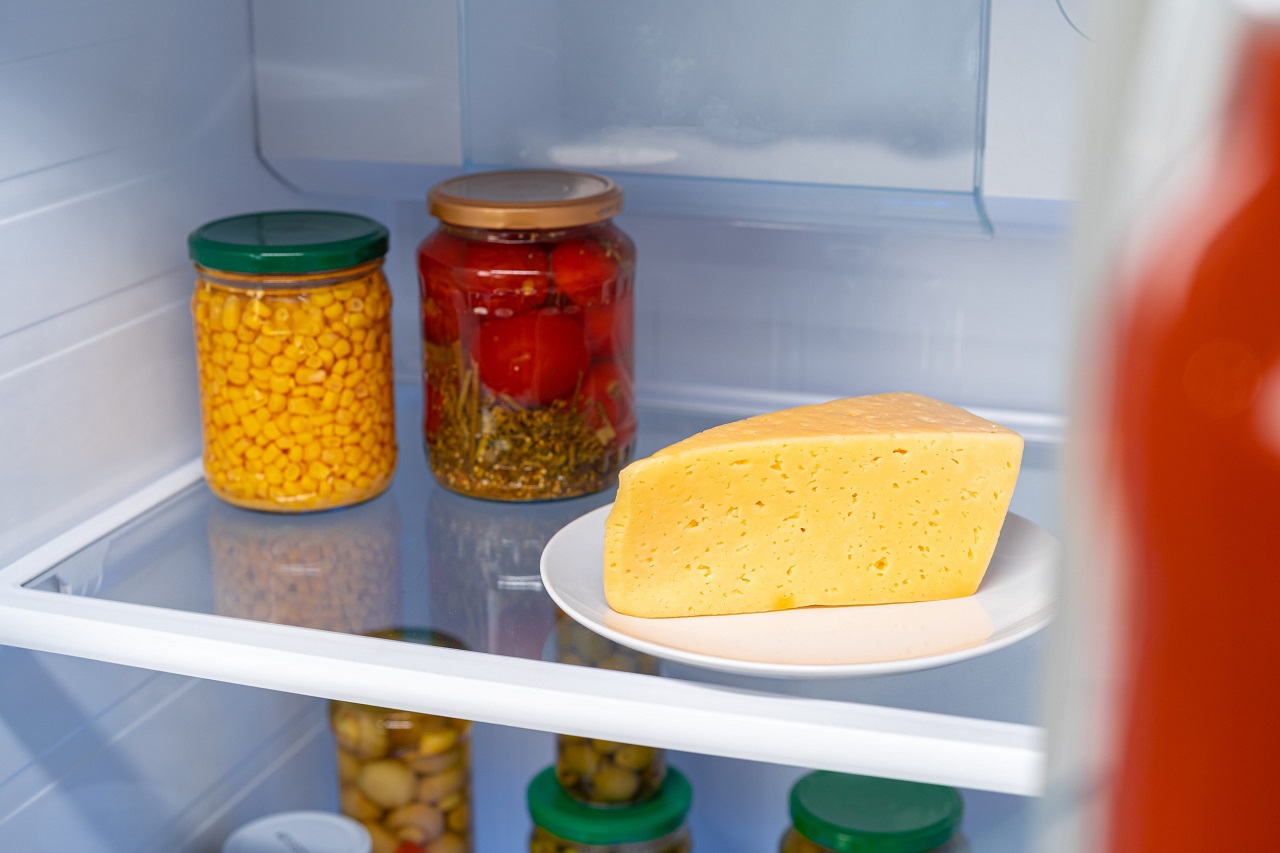
Opening a wedge of Cheddar and opening a tub of ricotta create very different storage jobs. Firm, aged cheese needs protection from drying out, along with limited airflow. Fresh, high-moisture cheese belongs in a tightly closed container and should be eaten promptly.
As a practical baseline, refrigerate opened cheese at 40°F (4°C) or below, retain any original brine or packing liquid, and mark the opening date. Use cheese paper, wax paper, or parchment for wedges.
Choose sealed containers for fresh, spreadable, shredded, and brined varieties. Moisture largely determines how long a cheese lasts and which wrapping method works best.
Give Cheese a Cold, Clean Home

Store cheese in the main refrigerator compartment or a deli drawer that reliably stays cold.
A well-organized Fridge also makes it easier to keep dairy products in consistently suitable storage conditions and away from warmer areas of the appliance.
The door experiences frequent temperature changes, making it a poor home for delicate dairy products.
According to FDA food-storage guidance, refrigerators should remain at or below 40°F (4°C). An inexpensive appliance thermometer offers a more reliable reading than a numbered dial.
Use a clean knife and cutting board whenever serving cheese. Remove the amount needed, then return the remaining piece to the refrigerator promptly.
Perishable food should generally spend no longer than two hours at room temperature, or one hour when temperatures exceed 90°F (32°C).
Match the Storage Method to the Cheese
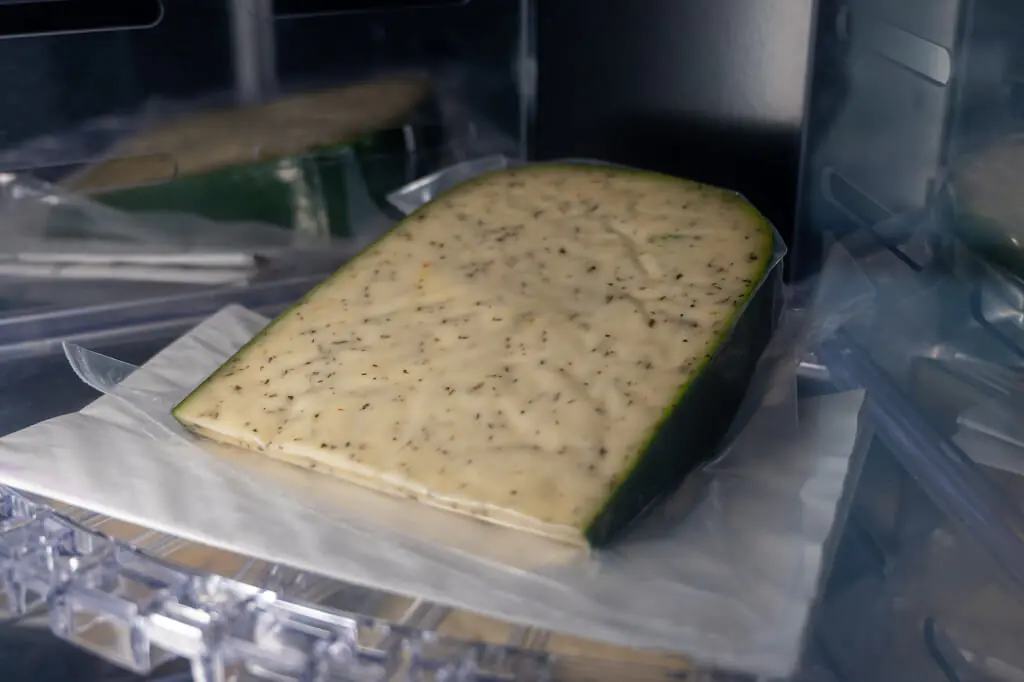
Cheese paper is particularly useful for intact wedges. Its coated, porous construction limits moisture loss while allowing a small amount of gas and moisture exchange.
Parchment paper offers a practical substitute, according to cheese-paper guidance from Dairy Farmers of Wisconsin.
A quick comparison makes the main differences clear:
| Cheese group | Examples | Best storage after opening |
| Fresh and spreadable | Ricotta, cottage cheese, mascarpone, cream cheese | Original tub or clean airtight container |
| Fresh cheese in liquid | Mozzarella, burrata | Submerged in original packing liquid |
| Brined cheese | Feta, halloumi | Covered by original brine in a sealed container |
| Soft-ripened cheese | Brie, Camembert | Cheese paper or parchment, followed by a loose outer container |
| Blue cheese | Stilton, Roquefort, Gorgonzola | Original foil, cheese paper, or parchment inside a separate box |
| Semi-hard and hard cheese | Cheddar, Gouda, Gruyère, Parmesan | Paper against the cheese, followed by a loose bag or container |
| Shredded, sliced, or crumbled cheese | Packaged Cheddar, mozzarella, feta | Resealed original package or airtight container |
Manufacturer instructions remain the best guide when a package specifies a shorter after-opening period.
Hard and Semi-Hard Wedges

Wrap Cheddar, Gouda, Manchego, Gruyère, Parmesan, and Pecorino in cheese paper, wax paper, or parchment.
Place the wrapped wedge in a partially closed storage bag or covered container. Paper protects the surface, and the outer layer slows moisture loss and keeps refrigerator odors away.
Direct plastic wrap works for brief storage, especially with very hard cheese. Replace any wrapper that becomes damp, greasy, torn, or stained. A fresh wrapper also gives the cut face a cleaner environment after repeated handling.
Keep edible natural rinds attached until serving. Parmesan rinds can later flavor soup, beans, or tomato sauce, so freezing clean leftover rinds in a labeled bag is a useful zero-waste habit.
Soft-Ripened and Blue Cheeses
Brie and Camembert continue changing after purchase. Wrap them in cheese paper or parchment and place them inside a loosely covered box. A little room around the wedge helps preserve the rind, while the box contains its increasingly earthy aroma.
Blue cheeses deserve their own wrapping and container. Roquefort beside butter can soon make the butter taste surprisingly Roquefort-like. Reuse clean original foil when available, or wrap the wedge in cheese paper or parchment.
Washed-rind cheeses such as Taleggio and Époisses also benefit from a separate box. Their orange or pinkish rinds and assertive aromas may be entirely normal, so learn the expected appearance of the variety before judging it.
Fresh, Spreadable, and Brined Cheeses
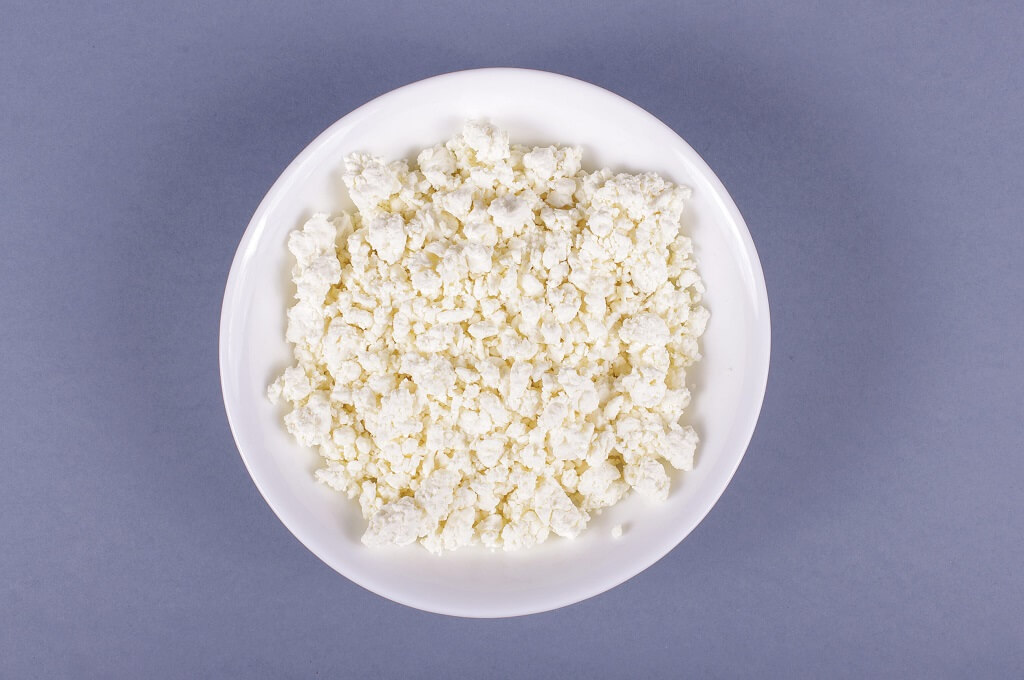
Ricotta, cottage cheese, mascarpone, and cream cheese contain considerably more moisture than aged wedges. Keep them in their original tubs with the lids firmly closed. Use a clean utensil each time and avoid returning served portions to the container.
Fresh mozzarella and burrata should remain in their original packing liquid inside a sealed container. Burrata has an especially short life after cutting because its creamy center becomes exposed. Plan to finish it within the period printed on the package, often within a day or two.
Feta and halloumi sold in brine should remain fully submerged. Preserve the original liquid whenever possible. If it is accidentally discarded, follow the producer’s directions before mixing replacement brine, since salt concentration influences flavor, texture, and keeping quality.
Shredded, Crumbled, and Sliced Cheese
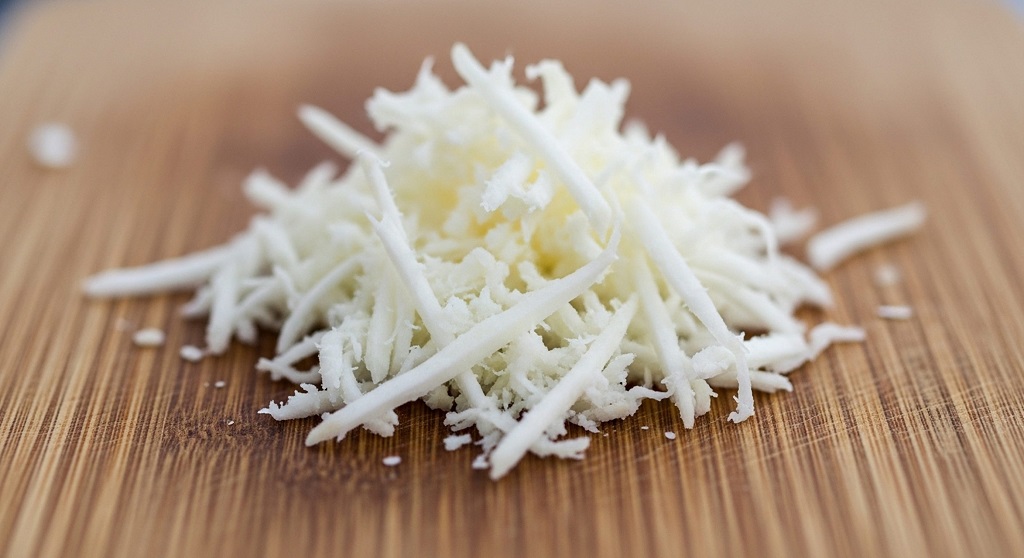
Ready-to-use cheese has far more exposed surface area than a block. Press excess air from a resealable package without crushing the contents, close it firmly, and keep serving hands away from the bag.
Individual slice wrappers should remain in place. For deli slices, retain any paper dividers and store the stack in a sealed container.
How Long Does Opened Cheese Last?
Moisture provides a useful rule of thumb: softer cheese usually has a shorter refrigerator life. USDA opened-cheese guidance gives hard blocks about three to four weeks after opening, most soft cheeses about one week, and cream cheese about two weeks.
Treat such periods as planning guides. Age at purchase, refrigerator temperature, handling, and packaging can shorten them.
Writing the opening date directly on the outer wrapper removes the familiar Sunday-evening puzzle of wondering when a lonely wedge first entered the cheese drawer.
Can Moldy Cheese Be Saved?
A white rind on Brie and blue veins in Stilton are intentional cultures. Fuzzy growth on cottage cheese belongs to a different category.
Under USDA mold guidance, an intact hard cheese can often be saved by cutting at least 1 inch (2.5 cm) around and below an unwanted mold spot. Keep the knife away from the mold itself, then place the remaining cheese in fresh wrapping.
Discard soft cheese with unexpected mold. The same rule applies to shredded, sliced, and crumbled products because contamination can extend below the visible area.
Avoid sniffing mold closely or tasting questionable cheese. An unfamiliar slimy coating, swollen package, abnormal discoloration, or putrid odor also signals disposal.
Can Opened Cheese Be Frozen?
Freezing works best for hard and semi-hard cheeses intended for cooking. Portion or grate the cheese, wrap it securely, and place it in a freezer-safe bag. Thaw it slowly in the refrigerator.
The National Center for Home Food Preservation notes in its home-preservation guidance that frozen hard cheese may become crumbly or mealy while retaining its flavor. Cream cheese, cottage cheese, and ricotta generally freeze poorly.
Thawed cheese with a changed texture still works well in sauces, soups, casseroles, and baked dishes.
Good Storage Follows the Cheese
Firm wedges favor breathable paper and gentle protection. Fresh cheeses need sealed containers. Brined varieties stay submerged, and ready-shredded products remain tightly closed.
Add a cold refrigerator, clean utensils, and a written opening date, and the cheese drawer becomes far less mysterious.