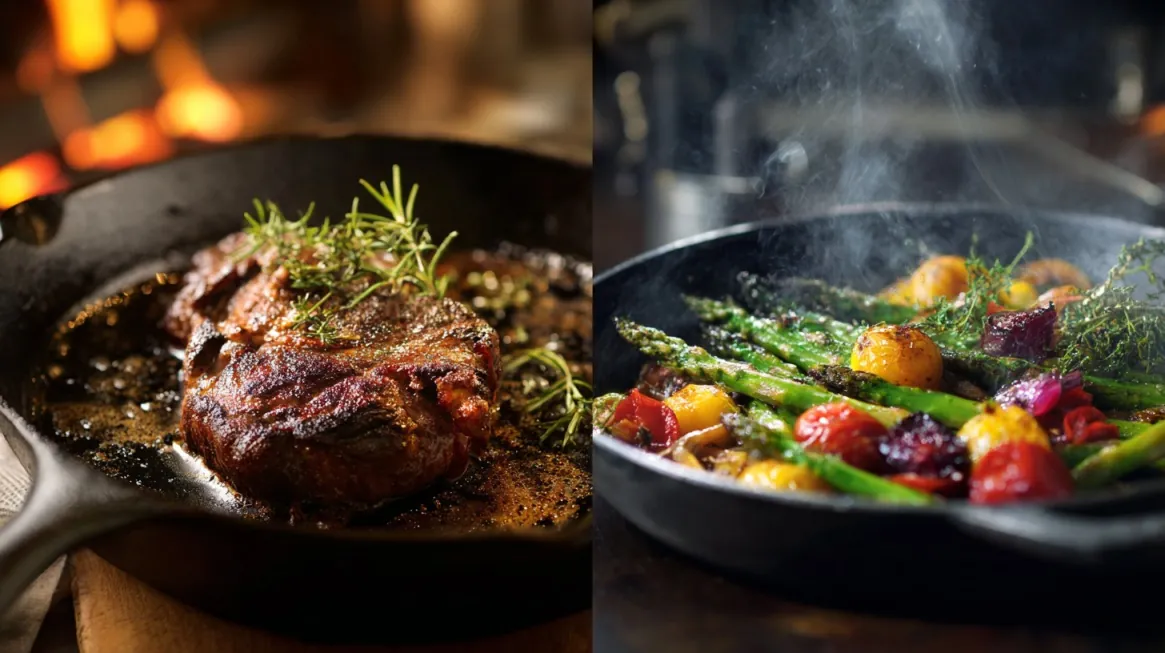
Cooking a great steak requires proper heat, timing, and equipment. Pan selection plays a major role in how effectively meat develops a crisp crust and deep flavor.
Two common choices in professional and home kitchens include cast iron and stainless steel cookware.
Searing relies on intense heat and direct contact between meat and the cooking surface. Pan material influences how heat moves, how long it stays hot, and how quickly temperature changes during cooking.
Differences between cast iron and stainless steel create noticeable results during steak preparation.
Cast-iron pans hold large amounts of heat and maintain temperature during cooking. Stainless steel pans heat quickly and respond rapidly when heat levels change.
Both options can produce excellent steak, yet performance characteristics differ in important ways.
Selecting the right pan often depends on cooking style, maintenance preferences, and desired results.
Side-by-Side Comparison
Choosing a pan for steak searing often comes down to heat behavior, cooking control, and long-term maintenance. Material composition changes how cookware reacts to temperature shifts, how crust forms, and how much effort is required for upkeep.
Cast iron and stainless steel both perform well for steak cooking, yet differences become noticeable when examining several key factors.
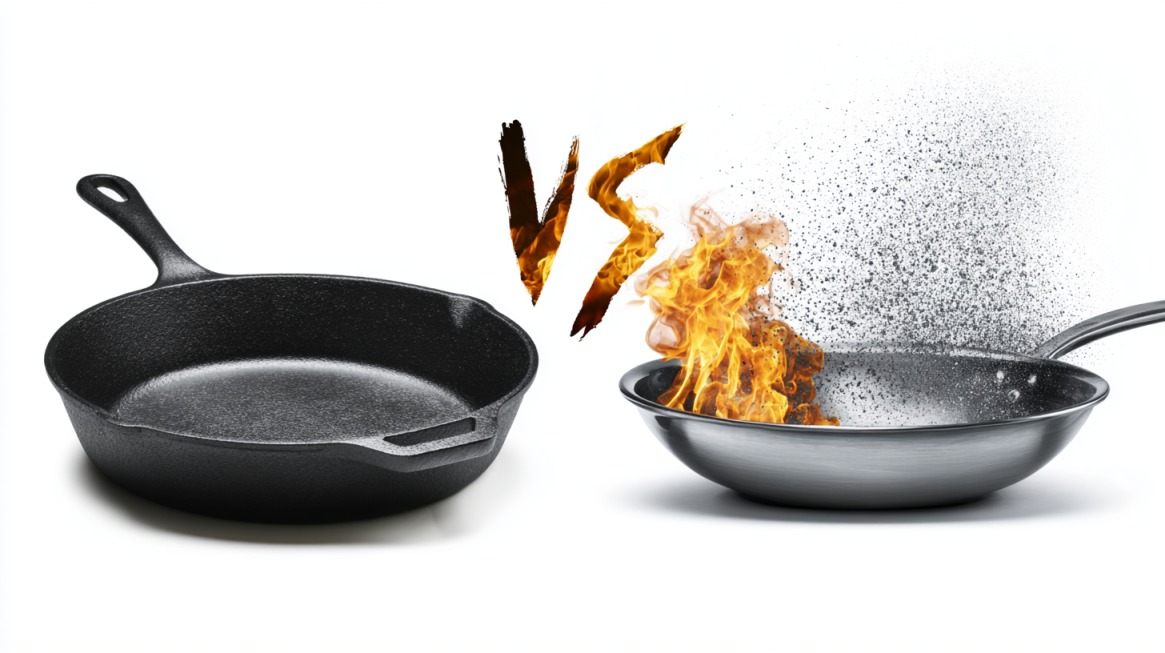
Heat Retention
Heat retention refers to how well a pan maintains temperature once food touches the surface. Strong heat retention helps maintain the conditions required for proper searing.
Cold meat instantly pulls energy away from the pan, so cookware that holds more thermal energy keeps the surface hot enough to sustain browning.
Cast iron contains thick iron walls and a large thermal mass. Stored heat allows the surface to stay stable even when a chilled steak enters the pan. The temperature drop tends to remain relatively small in a properly preheated skillet.
- Cast iron often loses less than 50°F when the steak touches the surface
- Surface temperature frequently stays within the ideal searing range of about 450°F to 500°F
- Stable heat allows the Maillard reaction to continue without interruption
Stainless steel behaves differently. Construction with thinner steel layers and conductive cores allows fast heating but stores less energy overall. Cold meat can reduce surface heat much more dramatically.
- Stainless steel pans may lose between 150°F and 200°F during initial contact with the steak
- Heat recovery occurs quickly once the burner continues heating the pan
Reduced heat retention does not prevent searing entirely, yet crust development may begin slightly slower.
Heating Speed
Heating speed is the rate at which a pan reaches the cooking temperature when placed on the stove. Material thickness and conductivity play major roles in this process.
Cast iron warms slowly because thick metal absorbs large amounts of energy before reaching high temperatures. Preheating usually requires several minutes to ensure the entire cooking surface becomes evenly hot.
Gradual heating provides some advantages. Large thermal mass creates consistent heat across the pan once it fully warms.
Stainless steel heats much faster due to conductive aluminum or copper layers placed inside the pan.
Quick responsiveness makes stainless steel useful during recipes that require precise heat management.
Crust Formation
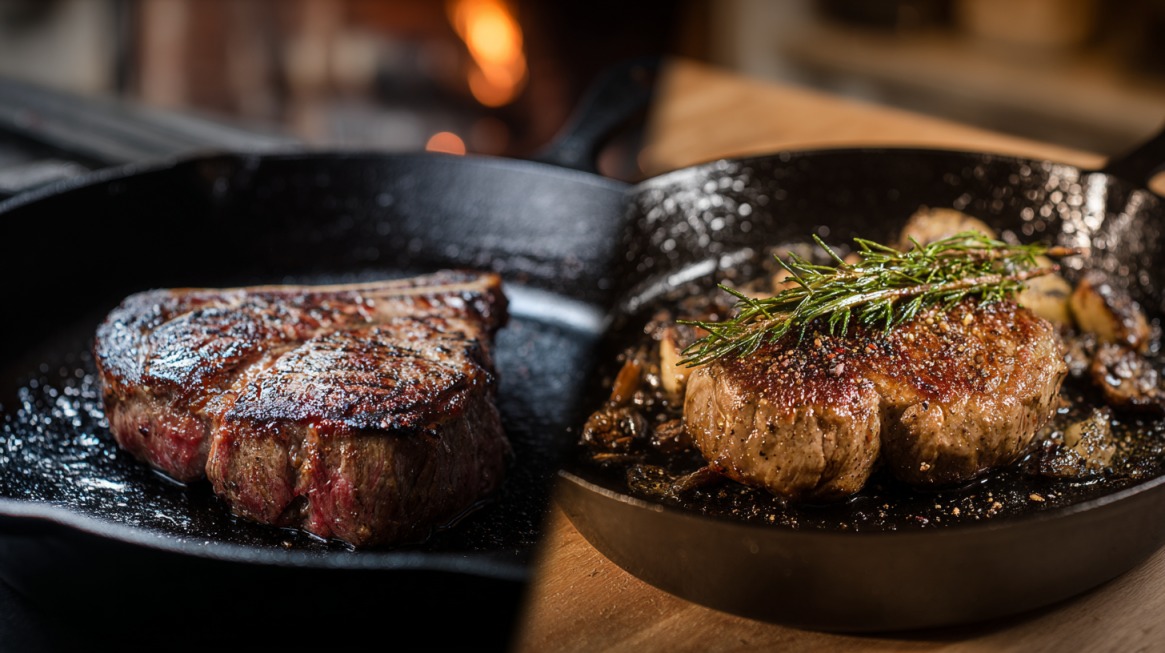
Crust formation represents one of the most important goals when cooking steak. Dark brown surfaces develop through the Maillard reaction once meat contacts very hot metal.
Stable heat plays a critical role in this process. Surface temperature must remain high enough to brown proteins and sugars quickly before moisture begins to accumulate.
Cast iron supports strong crust formation due to steady heat retention.
Once heated to the proper searing temperature, the iron continues delivering consistent thermal energy to the meat.
- Heavy construction increases contact pressure between the steak and the pan
- Stable temperatures allow continuous Maillard reaction activity
- Reduced heat loss prevents steaming
The resulting crust often appears darker and more uniform across the steak’s surface.
Stainless steel can still produce a well-browned exterior, though heat fluctuations may slightly reduce crust intensity. Strong preheating and proper oil use help improve results.
- Preheat the pan until the oil begins to shimmer
- Placing the steak into the pan without moving it initially
- Allowing enough time for browning before flipping
Proper handling allows stainless steel to produce satisfying searing results despite lower heat retention.
Maintenance
Cookware maintenance affects daily kitchen use as well as long-term durability. Cast iron and stainless steel require very different care routines.
Cast iron relies on seasoning, which consists of layers of oil heated onto the surface. Polymerized oil forms a protective coating that improves nonstick performance and prevents rust.
Consistent care helps preserve the cooking surface and extend pan life.
Stainless steel requires far less maintenance. Corrosion-resistant alloy prevents rust and tolerates standard cleaning products. Scrubbing with soap or abrasive pads does not damage the surface.
Many stainless steel pans can also handle dishwasher cleaning without affecting performance.
Durability
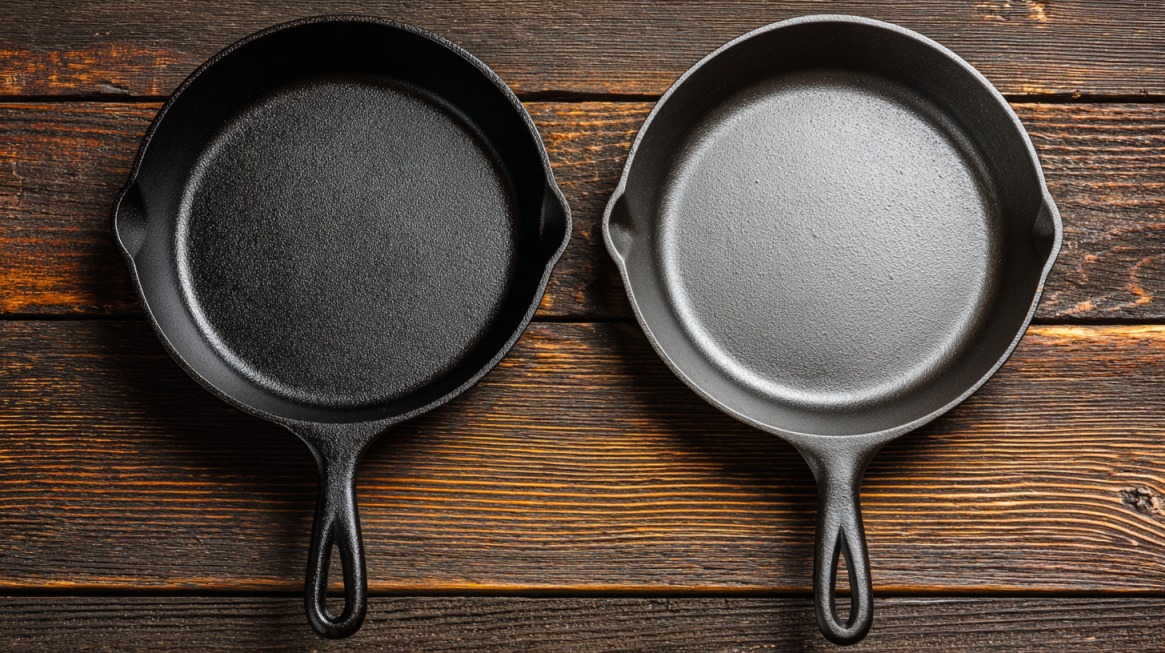
Durability plays an important role when selecting cookware intended for long-term use. Both cast iron and stainless steel offer impressive longevity.
Cast iron construction uses solid metal without coatings that wear away over time. Proper seasoning maintenance allows skillets to remain functional for generations.
- Resistance to warping under high heat
- Ability to restore surfaces through reseasoning
- Long service life, even with frequent use
Stainless steel cookware also offers strong durability thanks to corrosion-resistant alloy construction. Multi-layer designs reinforce the pan structure and help prevent deformation.
Quality stainless steel pans often maintain performance for decades with normal household use.
Cooking Versatility
Cooking versatility determines how well a pan performs across different techniques.
Cast iron performs extremely well during high-heat cooking methods. Thick metal walls allow it to tolerate intense temperatures without warping.
- Steak searing
- Pan frying
- Oven roasting
- Outdoor grilling
Oven compatibility expands cooking possibilities even further, allowing cooks to move the steak directly into the oven after searing.
Stainless steel excels in techniques that involve liquids or rapid temperature changes. Smooth surfaces allow easy deglazing and sauce creation after searing meat.
Typical stainless steel applications include sautéing vegetables, preparing pan sauces, and cooking dishes that contain acidic ingredients. Responsive heat control also makes stainless steel useful during recipes that require precise timing.
Cast Iron Pans for Steak Searing
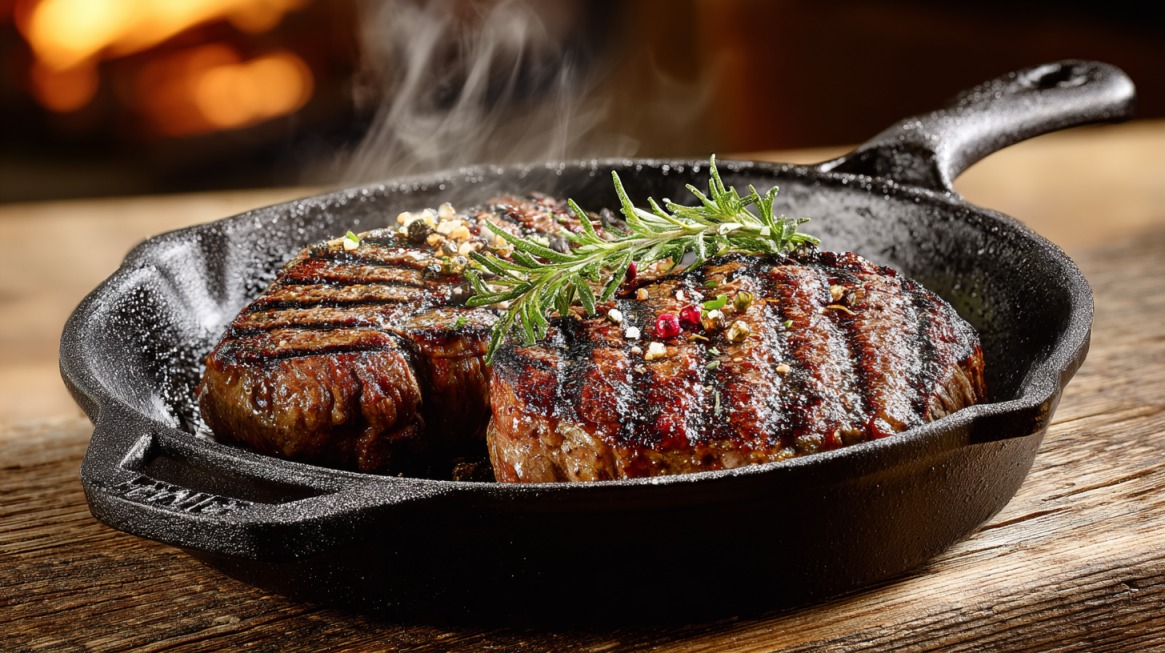
Cast iron cookware has existed for more than two thousand years. Molten iron poured into molds forms thick, heavy cookware that retains large amounts of heat.
Weight and thickness allow cast iron to store significant thermal energy. Heating takes longer than many other materials, yet once hot, the surface remains stable even when food enters the pan.
High thermal mass allows temperatures suitable for searing to remain stable across the cooking surface.
Advantages of Cast Iron
Excellent heat retention ranks as the primary advantage of cast iron. Large amounts of stored thermal energy keep the pan hot during cooking.
Surface temperature typically drops less than 50°F when the steak enters a properly heated cast-iron pan. Stable temperatures maintain conditions needed for strong browning and crust formation.
Ideal searing temperatures often range between 450°F and 500°F. Cast iron maintains these levels effectively during cooking.
Heavy construction also helps press steak evenly against the cooking surface. Increased contact improves crust formation across the entire cut of meat.
Seasoned cast iron develops a naturally slick cooking surface created through layers of polymerized oil. Proper seasoning reduces sticking and improves cooking performance.
Durability remains another major advantage. Cast-iron pans can last decades or even generations with basic care.
Compatibility with multiple heat sources adds versatility. Stovetops, ovens, grills, and open flames all work well with cast-iron cookware.
Disadvantages of Cast Iron
Weight creates handling challenges for some cooks. Large skillets can feel heavy when lifting or tilting during cooking.
Maintenance also requires more effort than other cookware. Seasoning must remain intact to prevent rust and maintain cooking performance.
Cleaning typically involves limited soap and immediate drying to avoid moisture damage.
Acidic ingredients, such as tomatoes or citrus, can react with exposed iron surfaces when the seasoning becomes thin.
Slow heating may also require extra time before cooking begins.
Stainless Steel Pans for Steak Searing
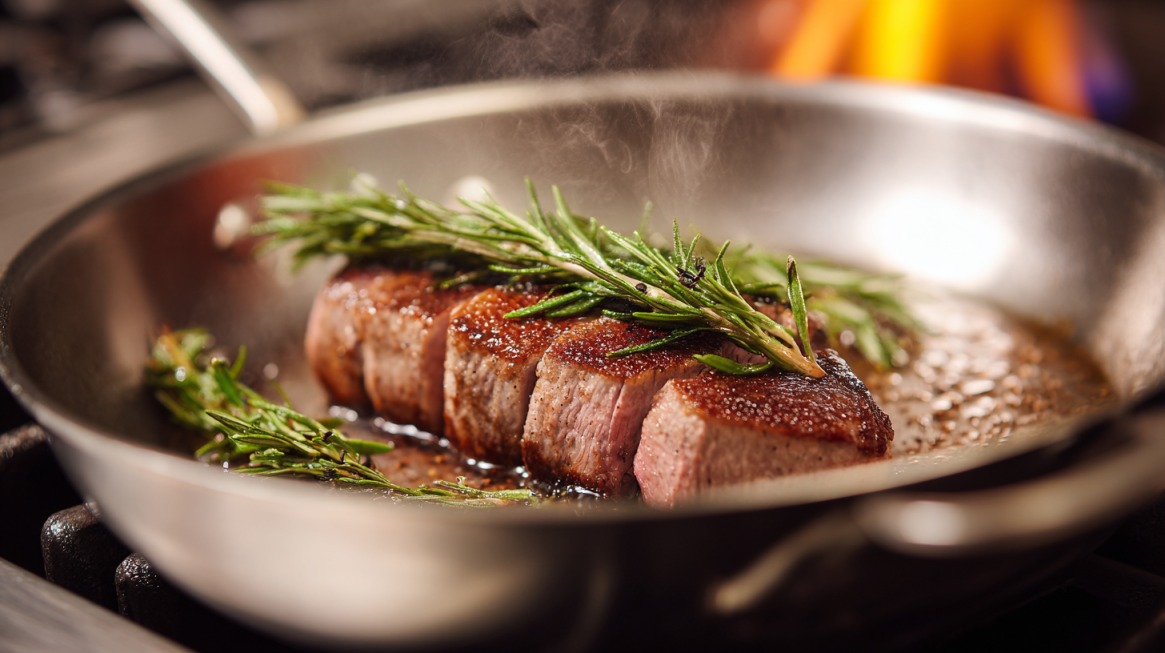
Stainless steel cookware uses a corrosion-resistant alloy designed for durability and easy cleaning. Many high-quality stainless steel pans use layered construction.
Multiple layers combine stainless steel with aluminum or copper cores. Aluminum and copper conduct heat efficiently, while stainless steel provides strength and resistance to rust.
Layered construction improves heat distribution across the cooking surface.
Advantages of Stainless Steel
Rapid heating ranks as a major benefit. Stainless steel pans reach cooking temperature quickly, allowing faster meal preparation.
Responsive temperature control also helps during cooking. Lowering burner heat quickly reduces pan temperature, which helps prevent overcooking.
Stainless steel works well with acidic ingredients since its corrosion resistance prevents chemical reactions.
Pan sauces benefit greatly from stainless steel surfaces. Browned bits left after searing dissolve easily during deglazing, creating flavorful sauces.
Weight also tends to remain lower compared with cast iron, which improves maneuverability in the kitchen.
Maintenance remains simple. Stainless steel tolerates soap, scrubbing, and dishwashers without damaging the surface.
Disadvantages of Stainless Steel
Lower thermal mass creates challenges during steak searing. Surface temperature can drop significantly when cold meat enters the pan.
Temperature reductions between 150°F and 200°F may occur in some stainless steel pans during initial contact with steak.
Large temperature drops slow crust formation and may lead to softer browning.
Food sticking can also occur if preheating and oil use are not handled correctly.
Proper technique usually requires heating the pan thoroughly before adding oil and meat.
Which Pan Do Chefs Prefer for Steak?
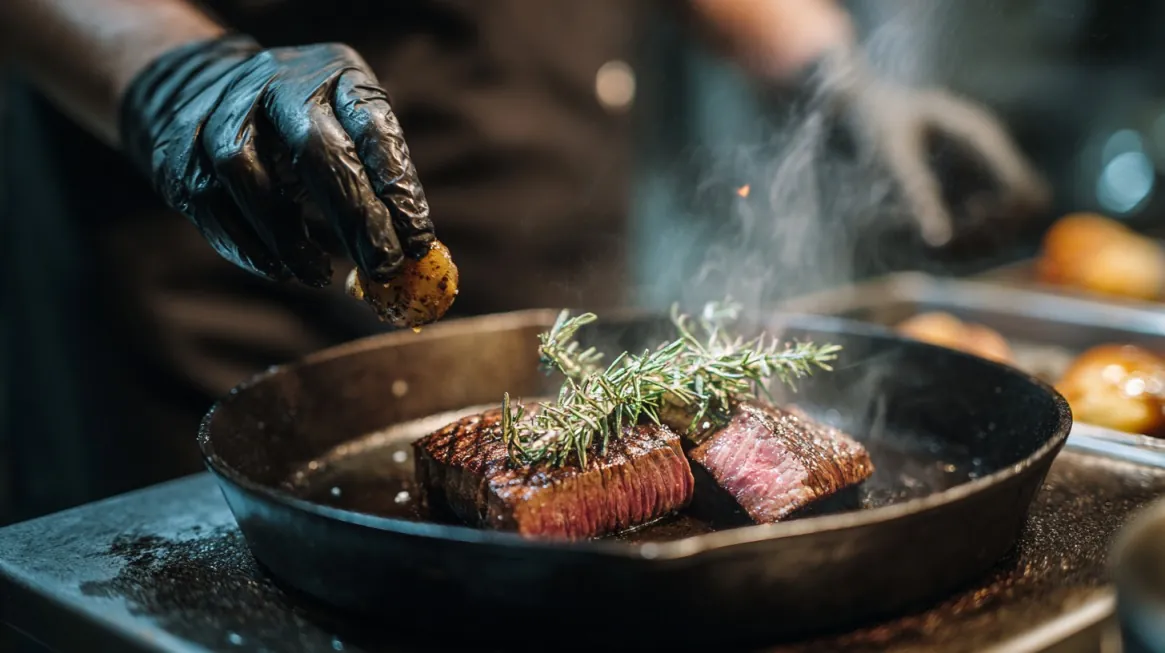
Professional kitchens often contain both cast iron and stainless steel cookware.
Cast iron frequently becomes the preferred tool for steak due to its ability to maintain intense heat during searing. Stable temperatures help create consistent crust development across thick cuts of meat.
Stainless steel remains popular when cooks plan to prepare sauces after searing. Browned bits left in the pan dissolve easily when liquid enters the pan, forming flavorful pan sauces.
Responsiveness to heat adjustments also makes stainless steel useful during multi-step cooking techniques.
Personal cooking style often determines preference. Many experienced cooks keep both pan types available to match specific cooking needs.
Pro tip: If you’re making steak, you should check out some food pairing ideas to make your meal feel like you’re in a restaurant, like garlic parmesan fries. They add up to a fuller taste!
Summary
Pan material plays a major role in steak quality. Heat retention, responsiveness, and maintenance requirements differ between cast iron and stainless steel cookware.
Cast iron offers superior heat stability, strong crust formation, and long-lasting durability. Heavy construction maintains ideal searing temperatures even when cold steak enters the pan.
Stainless steel offers faster heating, simple maintenance, and excellent performance during sauce preparation. Responsive temperature control also benefits cooks who prefer precise heat adjustments.

I’m Leo McIntyre, and my love for cooking was born in my grandmother’s kitchen, where I discovered the magic of traditional Southern recipes. Inspired by her passion and the flavors of my childhood, I started SouthernParm to share these treasured family dishes and keep the rich culinary traditions of the South alive for everyone to enjoy.