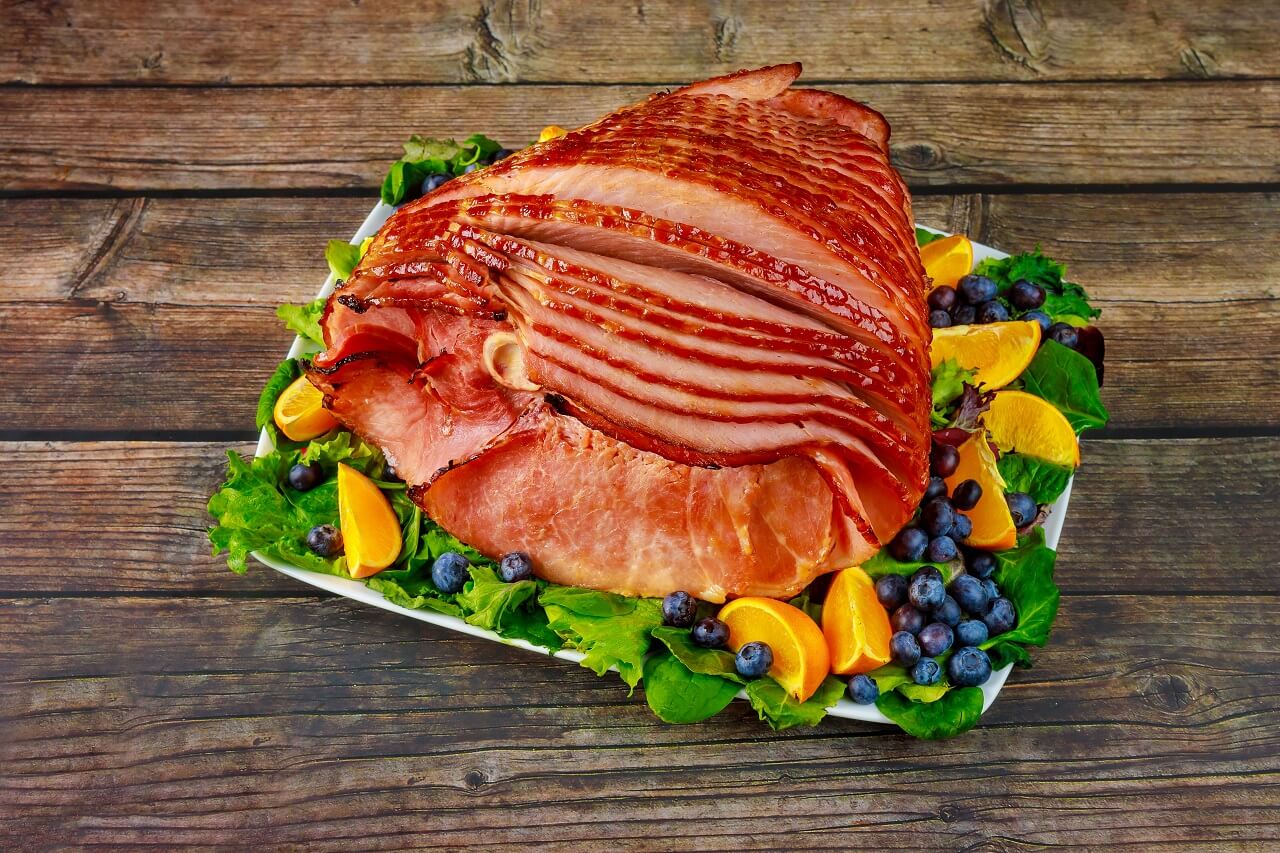
A butt portion ham is easy to mess up if you treat it like raw meat. Most of the time, it is already cooked. All you really need to do is heat it through without drying it out.
The mistake people make is turning the oven too high and leaving it uncovered. That pulls moisture out fast. What you want instead is steady heat, a covered pan, and a thermometer so you know exactly when to take it out.
If you handle it gently, you will end up with tender slices that stay juicy all the way through, not dry edges and a tight center.
Here is how to do it the right way.
What Is A Butt Portion Ham?

A butt portion ham comes from the upper part of the pig’s back leg, closer to the hip. It is the thicker end of a whole ham and usually includes part of the hip bone, which adds flavor as it warms.
In most grocery stores, that ham has already been cured, smoked, and fully cooked. You are not dealing with raw pork. You are heating a finished product, so it is ready to serve.
Compared to the shank end, the butt portion is leaner and more solid in shape. It slices evenly and looks clean on a platter, which is why many people choose it for holidays or family meals. That lean structure also means it can dry out faster if the oven is too hot or if it sits uncovered for too long.
Most weigh between five and nine pounds, so they fit comfortably in a standard oven and feed a small crowd without being overwhelming. Once you understand the cut and how it has already been prepared, the rest becomes simple.
Keep the heat steady, protect the moisture, and warm it through instead of trying to roast it from scratch.
The One Thing To Check Before The Oven Goes On
Before you preheat anything, read the label.
Most butt portion hams are fully cooked. If that is what you have, you are simply reheating it. The goal is to bring the internal temperature up gently without drying it out.
If the label says “cook before eating,” that is different. That ham has been cured or smoked, but it still needs to reach a safe internal temperature as part of the cooking process. In that case, you are fully cooking it, not just warming it.
The label also tells you whether it is bone-in or boneless, and whether it has been spiral sliced. Spiral-sliced hams heat faster and dry out more easily because more surface area is exposed. That changes how carefully you need to cover it and monitor temperature.
The Simple Method That Keeps It Moist
View this post on Instagram
The biggest mistake with the butt portion is using too much heat. Since it is already cooked, high oven temperatures only squeeze moisture out of the meat. What you want is steady, moderate heat and a setup that protects the surface.
Preheat the oven to 325°F. That temperature is warm enough to heat the center gradually without tightening the outer layers too fast.
Take the ham out of the packaging and place it cut side down in a roasting pan. Setting it flat side down reduces exposed surface area and helps shield the sliced face from direct heat.
Add a small amount of liquid to the bottom of the pan, about one cup. Water works fine. Broth or a little apple juice adds mild flavor without overpowering the ham. The liquid does not boil the meat. It creates a humid environment inside the covered pan, which slows moisture loss.
Cover the pan tightly with foil. Seal the edges well. That cover traps steam and keeps the exterior from drying while the center warms.
Heat the ham until the internal temperature reaches the correct target for your label. For most fully cooked hams, that means 140°F when reheating from original packaging. Use a thermometer inserted into the thickest part without touching the bone. Time can guide you, but temperature decides when it is ready.
As a general guide, plan on roughly 15 to 20 minutes per pound at 325°F. A five to six-pound ham may take around an hour and a half. Larger ones need closer to two hours.
Always rely on the thermometer instead of the clock.
Keep it covered the entire time unless you plan to glaze at the end. Slow heating, moisture in the pan, and a sealed cover are what keep the slices tender instead of dry and tight.
How to Cook a Precooked Ham?
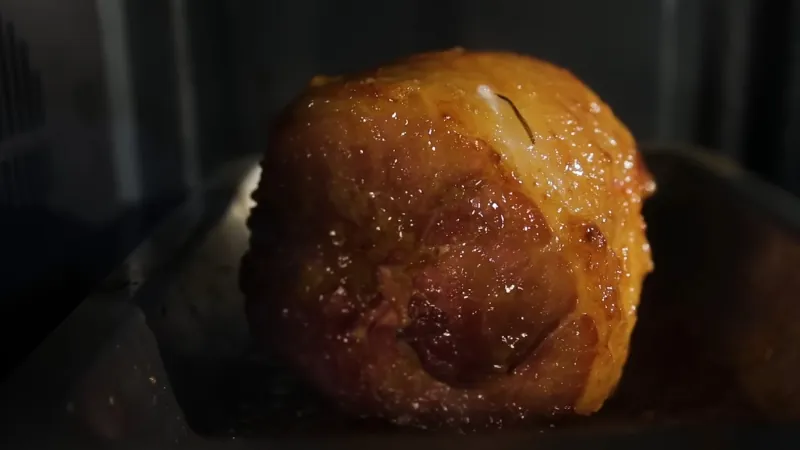
At 325°F, a fully cooked ham usually takes about 15 to 20 minutes per pound to heat through. So if you are wondering how long it takes to cook a ham, a seven-pound piece will often need close to two hours. That number can shift depending on shape, bone, and how cold it was when it went into the oven.
To check it properly, insert the thermometer into the thickest part of the ham and keep it away from the bone. For a fully cooked ham, it is ready at 140°F. If the label says cook before eating, it needs to reach 145°F and rest briefly before slicing.
Once it hits the right temperature, take it out. Leaving it in longer will not improve it. It only dries it out.
Glaze, Rest, And Slice The Right Way
The oven work might be done, but this is where people usually mess it up. A good ham can dry out in the last twenty minutes if you rush it, crank the heat, or start carving too soon.
Take your time here. Small details make a visible difference on the plate.
When To Add The Glaze
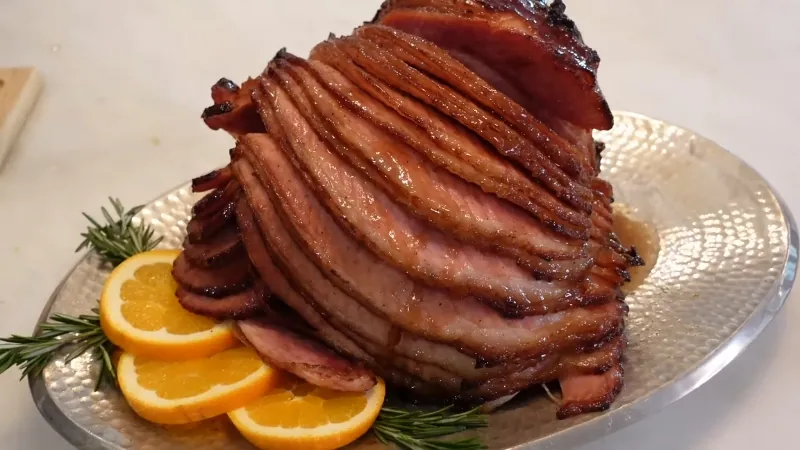
Do not glaze from the start. Sugar on a hot surface for two hours turns dark and bitter.
Wait until the final 20 to 30 minutes. Remove the foil, brush the glaze over the surface, and return the ham to the oven at the same 325°F. The glaze will slowly melt, tighten, and form a light coating without burning.
One thin layer is enough. If you want more shine, brush a second coat halfway through that final stretch. You are building a finish, not frosting a cake.
How To Make A Perfect 2 Ingredient Ham Glaze
You really only need two things: brown sugar and Dijon mustard.
Mix them in equal parts until smooth. The sugar gives sweetness and a glossy look. The mustard cuts through the salt and keeps it from tasting flat. That balance is what makes it work.
If it feels too thick, warm it slightly so it spreads easily. Brush it on evenly. Let the oven do the rest.
Let It Rest
Once the ham reaches temperature, take it out and leave it alone for about 15 minutes. Cover it loosely with foil.
During that time, the juices settle back into the meat. If you slice immediately, they run straight onto the cutting board. A short rest keeps that moisture where it belongs.
Slice it Properly
Use a sharp knife and cut across the grain. You will see the direction of the muscle lines on the cut face. Slice against those lines for tender pieces.
Keep the slices even and not too thick. Thick slabs look dramatic but lose heat fast and can feel dense. Even slices hold warmth and stay pleasant to eat.
How To Store And Reheat Leftovers?

Once the meal is over, do not leave the ham sitting out for hours. After about two hours at room temperature, it should be wrapped and moved to the refrigerator.
Slice what you need, then wrap the remaining piece tightly in foil or plastic wrap. You can also store slices in an airtight container. Properly refrigerated, cooked ham keeps well for three to four days.
If you want to freeze it, wrap it tightly to prevent freezer burn. For the best quality, use it within a couple of months. It stays safe longer, but the texture starts to decline over time.
When it comes to reheating, treat it the same way you did the first time: gentle heat and a little moisture. Place slices in a small baking dish, add a spoonful or two of water or broth, and cover with foil. Warm at a low temperature until heated through.
Avoid blasting it in the microwave uncovered. That is the fastest way to turn good leftovers into dry, tough slices. Low heat and light coverage keep the texture close to what it was on the first day.
If you store it well and reheat it gently, leftover ham can taste almost as good the next day as it did when you first served it.
Final Thoughts
Cooking a butt portion of ham does not require tricks or complicated steps. Keep the oven steady at 325°F, cover it well, and use a thermometer instead of guessing.
Most problems happen when the heat goes too high, or the ham stays in too long. Since it is usually already fully cooked, the goal is simple: warm it through and keep the moisture where it belongs.
Stick to that, and you get clean slices, balanced flavor, and tender meat from edge to center.
Next recipe to check out: Sweet & Savory Candied Bacon

I’m Leo McIntyre, and my love for cooking was born in my grandmother’s kitchen, where I discovered the magic of traditional Southern recipes. Inspired by her passion and the flavors of my childhood, I started SouthernParm to share these treasured family dishes and keep the rich culinary traditions of the South alive for everyone to enjoy.